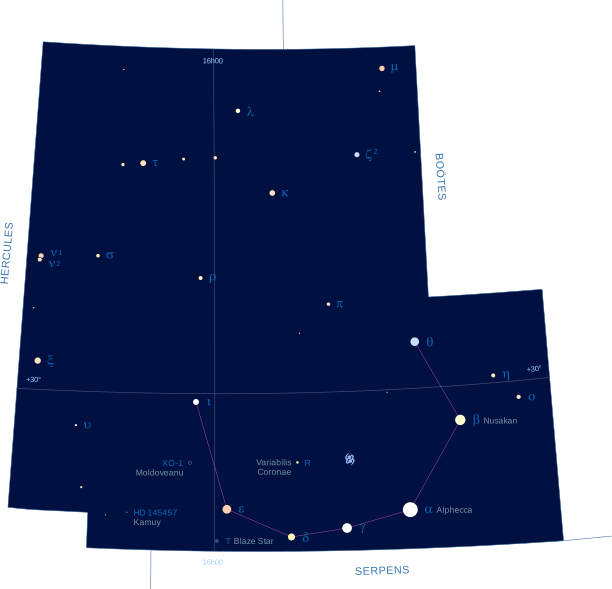
This group of stars is small and not particularly bright (the brightest, Alphecca, is only magnitude +2.2). Nonetheless, the seven main stars are grouped in a distinctive and recognizable U-shaped formation that calls to mind the shape of a crown or diadem.
This group has been called 'The Crown' since classical times, and there are several
conflicting myths to explain its presence in the sky. The most popular legend makes it the
headband of Ariadne, the daughter of Minos. When Dionysus came upon her on the island
of Naxos, it is said, he threw her jewelled band into the sky to prove his godhood,
and then claimed her as his wife.
Following the loop of the crown, the next star is fainter still (magnitude +5.4), but
important. This is Rho Coronae Borealis, a binarystar but otherwise very similar to
our own Sun, and known to have a planet in orbit.




 Show on Sky Map